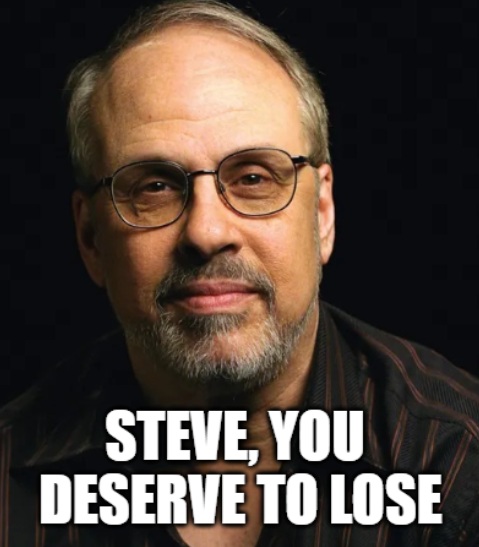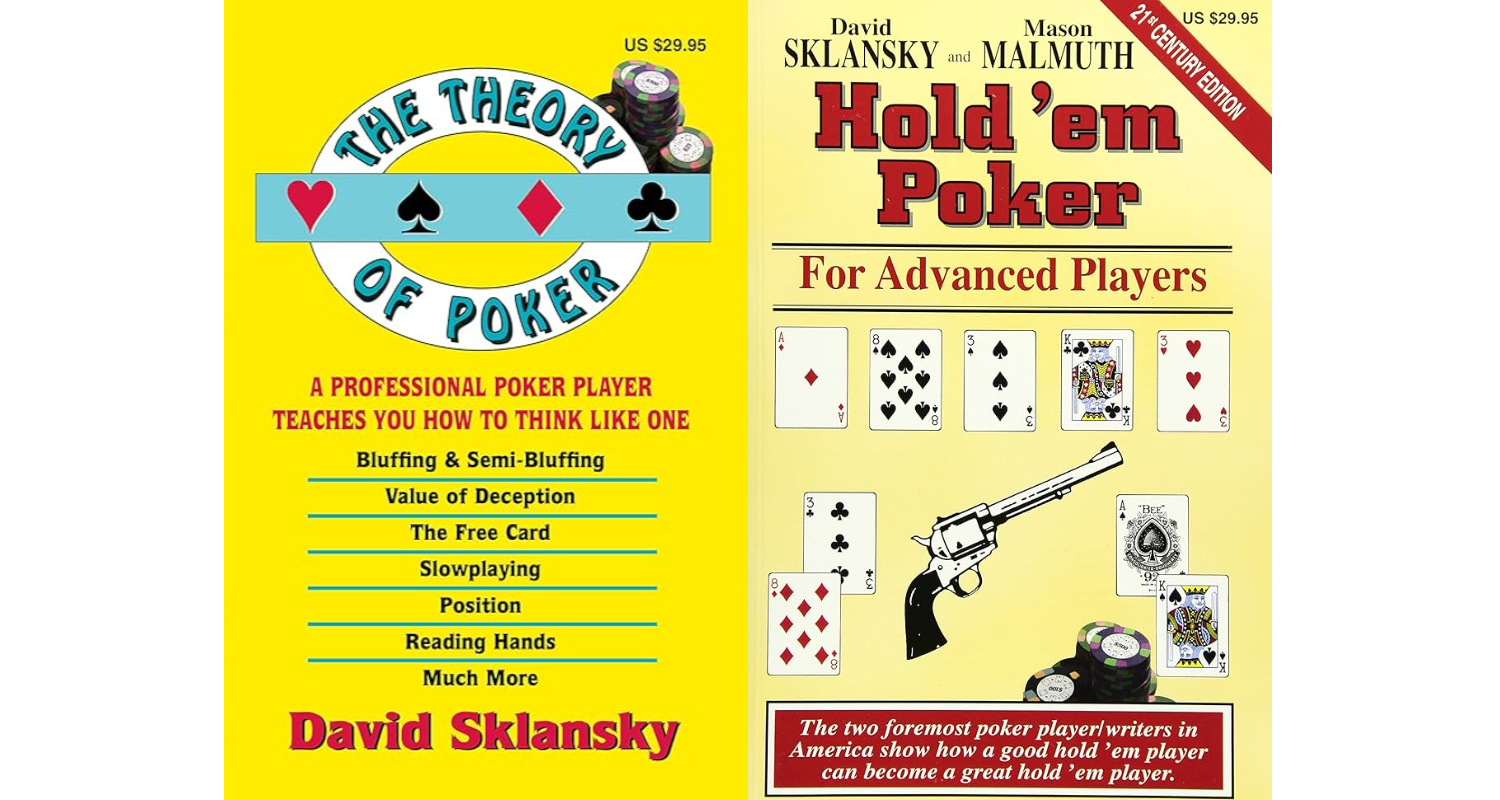
I was saddened to hear about the passing of David Sklansky. I’m told he wasn’t a perfect human being, but he sure knew the game the poker like no one else.
While many players identify with Super/System and the “cowboy” era of Doyle Brunson, what drew me in was the cold, hard logic of The Theory of Poker.
The Appeal of Arrogant Logic
Sklansky’s writing spoke to me because he was perfectly, unapologetically logical about everything. In those days, I’ll admit I shared a bit of his trademark arrogance, especially when it came to playing cards. Ok I shared more than a bit of it. I told many people I was the greatest poker player that ever lived. (I found out later it was just that my opponents were really, really bad.)
One of my favorite moments in The Theory of Poker (or it could have been in Hold’em Poker for Advanced Players) occurs after he completes a relatively straightforward algebraic calculation—I believe it was regarding basic pot odds. He ended the section with a piece of “tough love” that only Sklansky could deliver:
“If you don’t know how I got that , stop reading this book right now. You are not ready for it. You don’t know enough about poker. And, you deserve to lose.”
“And, you deserve to lose.” I absolutely love it. It wasn’t just an insult; it was a mathematical truth. If you wouldn’t do the work to understand the foundation, you had no business complaining about the results.
Watching a Legend at Work
Back in the day, I would see him quite often in Las Vegas, usually at the Mirage playing mid-to-high stakes games like 40/80 Limit Hold’em and up. It was a testament to his skill that even though he had literally written the book and “given all his secrets away,” he was still better than everyone at the table. He didn’t just understand the theory; he lived it.
The most recent story I heard about him was a bit of a “full circle” Vegas moment. He apparently tried to sell one of his WSOP watches (from an era where they awarded watches instead of bracelets) to the shop on Pawn Stars. They didn’t make him an offer because they weren’t sure who they could resell it to. They didn’t realize they were looking at a piece of history from the man who defined the modern game.
The Fundamental Theorem of Poker
His most enduring contribution to the game is undoubtedly the Fundamental Theorem of Poker:
“Every time you play a hand differently from the way you would have played it if you could see all your opponents’ cards, they gain. Every time you play your hand the same way you would have played it if you could see all their cards, they lose.”
This stripped the game of its mystery. It reminded us that over a long enough timeline, we all are dealt the same cards. The winners are simply the ones who play those cards closest to “the truth”—the way they would be played if information were perfect.
From Instinct to Science
I wonder how many thousands of poker players started exactly where I did—with The Theory of Poker in one hand and a calculator in the other. Before David Sklansky, most people played by pure instinct. He was the one who turned a gambling game into a science. (Super/System came out earlier, and Sklansky contributed to that book too)
Another poker legend is gone, but his mark on the game is permanent. Every time I sit down at the table and realize I’ve miscomputed my pot odds or made a sub-optimal bet, I’ll hear his voice in my head saying: