
The annual World Series of Poker (WSOP) offers a time to play in massive fields and high buy-in events. In 2026, bracelets have already been won by notables such as Alex and Kristen Foxen, Nick Schulman, and Advanced Poker Training coach Scott Clements (his fourth). But there is a practical side as well. Every two years, the Tournament Poker Association (TDA) holds its Summit to review potential rule and procedural changes for poker tournaments. These rules apply not only to WSOP events, but daily tournaments and special series around the country. Innovations such as standardization of the big blind ante have emerged from past TDA Summits. The 2026 Summit takes place in Las Vegas in a few days (June 29th and 30th), and APT founder Steve Blay will be attending.
Recent technology issues and poker strategy developments have pushed this year’s agenda. Additionally, player conduct continues to be debated. Tournament director and player opinions will likely vary greatly in some areas.
Below we offer some of the potential rule changes on the agenda. How do you feel about the following issues? If you were Steve, how would you vote?
Use of Electronic Devices
Advances in hardware (e.g., smart glasses) and AI applications have increased the risk of real-time assistance at the tables. While it is widely agreed that using assistance during a hand is a no-no, how limitations will be enforced with these new technologies or potential sly use of cell phones is open for debate. Should smart glasses be banned completely? Should phones be put away entirely (e.g., in pockets, out of view) when in a hand? What do you think?
Headphone Use
Headphone use is so universal that banning it seems unthinkable. For those who use headphones to focus, particularly in the presence of distracting tablemates, curbing them would hurt. But the potential to use headphones as a communication device for outside assistance is high. There are also other issues, like players not hearing action and thus slowing play. The debate on headphones is among the most intense going into the TDA Summit. Perhaps rules should vary at large events versus local cardrooms? Should there be limitations to headphone use?
Late Registration and Re-Entry
How long registration periods last and whether re-entry is allowed (and how many times) vary greatly from tournament to tournament. Calls for more standardization have been out there for a while, but the area is complicated. How would you standardize the registration period? By number of levels, how many big blinds remain in a starting stack, or something else? The highly variable structures needed for different types of events make this challenging. While it’s unlikely a rule such as “all events are freeze-outs,” will evolve, there is an argument for limiting the number of rebuys. Some deep-pocket players start to border on making a mockery of play by shoving all-in every hand with unlimited rebuys. But is that their right? And such behavior builds the money pool with suboptimal play, so should we all want that?
Leaving One Chip Behind
An increasingly common practice late in events, usually near a pay jump, is for a player to push everything into the middle except one low-value chip.
This can be done for multiple reasons: 1) extending play so if someone goes out at another table, you level up instead of them, 2) making the big bet (e.g., 10 BBs) more intimidating than the all-in, or 3) creating confusion at the table, which may benefit the player by inducing folds. Problems have arisen with this behavior. For example, when another player then goes all-in over the top, the initial “one chip back” raiser tanks for several minutes before making the obvious call. Also, problems have been created when another player calls, assumes it was an all-in, and exposes their hand. By strict rules, they may face a penalty for this action, but were they induced into it? Everything from banning this practice (but then how about 2 chips, 5 chips, 5% of stack?) to setting a time limit for action could be in play here.
Out-of-Turn Action
This relates to not only the “one chip behind” scenarios but any moment during play. What should be the reaction when a player acts out-of-turn? Should there be a single warning, then a one-turn or round penalty? Should there be an immediate penalty to encourage paying attention and reduce the risk of any collusion?
Face Coverings
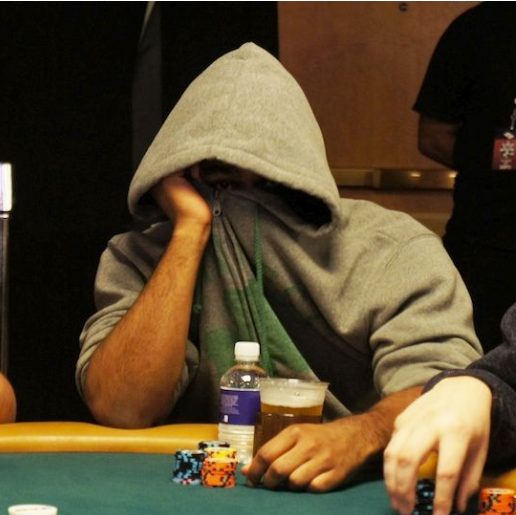
There is a current TDA rule “Player must be clearly identifiable at all times”. The floor can request removal of sunglasses, hoodies, etc. if his is not the case. Watching the 2026 WSOP this week calls into question how stringently that is being enforced. Watching a player with a hoodie and sunglasses pull his sweatshirt over the rest of his face, seems not in the spirit of this rule. In recent years, there has been some call that two of the three of eye, top of head or mouth need to be visible. But nothing is codified. Should you be allowed to fully, or mostly fully, see who you are playing against? What say you?
Players Verbal Conduct
Will Kassouf is living rent-free in too many poker players’ and tournament directors’ minds. He, along with Martin Kabrhel, have been active agents driving the need to clarify exactly what kind of speech play is allowed during and between hands. “You can’t talk about the hand” just doesn’t cover their antics. How such behavior pushes a lack of civility at the tables has troubled some. Conversely, is shutting down all banter taking some of the fun out of tournament play? Will poker veer to the No Fun League like the NFL has been labelled?
What Would You Advise the TDA?
So what do you think? How would you advise Steve to vote on the topics above?
Let us know in the comments section what you think about these TDA issues. Steve will be sure to read the comments before he heads to the TDA Summit!
If you missed it, check out Scott Clements Wins Fourth WSOP Bracelet in $10,000 Omaha Hi-Lo Championship, with a look at Clements 2026 victory.
