
If you’ve spent much time in a cardroom or in online poker, you will have witnessed PLO at some point. The poker format has exploded in the past few years, and a lot more No-Limit Hold’em players are either bringing it into their wheelhouse or diverting to PLO entirely.
What is PLO, what does PLO mean, and how is it different from Texas No-Limit Hold’em? This guide below breaks it all down, giving you basic rules, common mistakes and more.
What does PLO mean in poker?
PLO stands for Pot-Limit Omaha. It is a variant of Omaha poker, which itself is a cousin of Texas Hold’em. The name breaks down into two parts, and both matter.
“Omaha” refers to a game where players get four cards instead of two, and the “pot-limit” explains why the betting is capped at the current size of the pot, rather than betting any amount you want. These two things together become Pot-Limit Omaha, a four-card pot-sized bets game.
While 4-card is the original format of PLO, you are now seeing 5-card and 6-card balloons in popularity. The only real thing to know is that with more cards, there is more variance, and a lot more action. Equities run a lot closer, so be warned if you ever fancy getting involved in those games.
How PLO works: the basic rules
If you understand NLH, you will get PLO without a doubt.
The hand goes through the same flow. Players get dealt cards, five community cards are dealt across the same three stages, there are four betting rounds and the positions/blinds are the same.
There are two crucial differences, and getting your head around them is the key to the whole game.
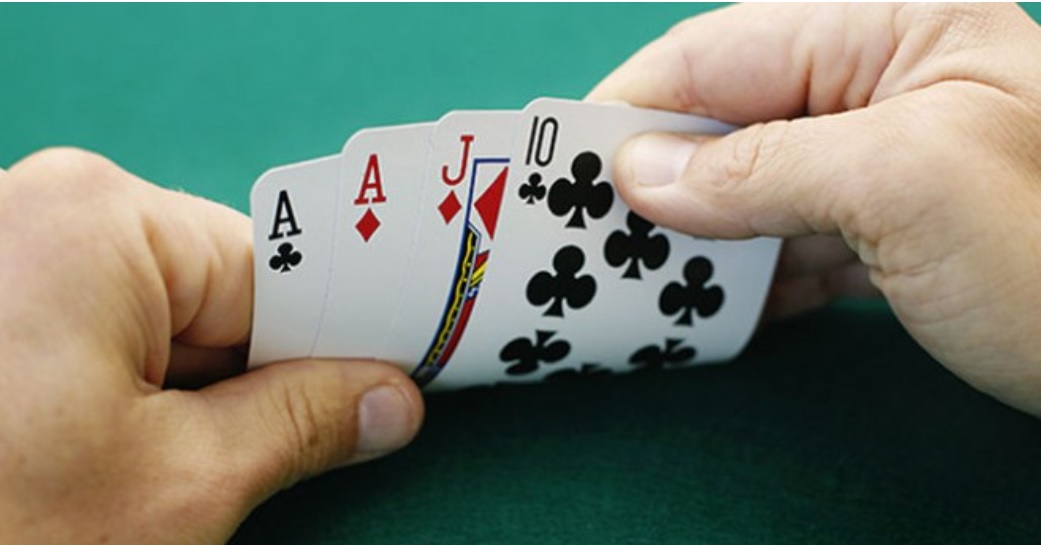
You are dealt four hole cards, not two. Four cards generate so many more possibilities and therefore action compared to NLH, so be prepared for that. There are a lot of hands that look nice but don’t play very well, and vice-versa, so be warned.
You must use exactly two of your hole cards. In my middling PLO experience, this is the rule that always confuses newcomers. So read it multiple times. You must use two of your cards, not one and not three, combined with the community cards.
So if you have the ace of hearts and there are four hearts out there, don’t think you have a flush. You need another heart in your hand. This rule applies for straights, you need two cards that make the straight, not just one. Always read your hand carefully and don’t be afraid to take your time at the table.
What does Pot-Limit mean?
The pot-limit aspect is something newcomers should get to grips with.
In NLH you can wager any amount up to your entire stack at any time. In PLO, you can only bet or raise the current size of the pot. You cannot just move all-in for an overbet the same way you can in NLH.
Working out the pot size takes a lot of practice and experience to get right, because it involves any bets and calls already made in the current round. If you play online, it is all worked out for you, but live poker requires you to do a bit of arithmetic.
The best thing about pot-limit is that the pots get built gradually, hands can be realized more and the game can get very technical. You should get used to playing lots of streets of poker in PLO.
Why PLO plays so differently from Hold’em
Despite some crossover, PLO plays a lot differently to NLH. Here are some core fundamentals you should understand:
Equities run much closer together. Because everyone has four cards to work with, hands connect with the board far more often. Aces in NLH are super-nutted, but in PLO even random four-cards have a decent amount of equity against them.
Draws are everything. PLO is often called a game of draws, and for good reason. With four hole cards, you will frequently flop enormous combination draws, holdings that can hit a straight, a flush, or better in multiple ways at once. A strong drawing hand in PLO can actually be a favorite over a made hand like top set, which almost never happens in Hold’em.
The nuts matter more. Because so many hands improve and draws complete constantly, PLO rewards players who make the strongest possible hands. Second-best hands, which might win plenty of pots in Hold’em, are far more likely to be beaten in PLO. Learning to recognize when you have “the nuts,” the best possible hand, and when you are drawing to it, is central to the whole game.
Position is even more valuable. Since PLO is so draw-heavy and situational, acting last and having more information is worth even more than it is in Hold’em. A good position lets you control the size of the pot and realize your equity more effectively.
PLO starting hands for beginners
In Hold’em you learn to value hands like pocket pairs and big suited connectors. PLO starting hand selection is a little more nuanced, but there are some clear principles that will keep beginners out of trouble.
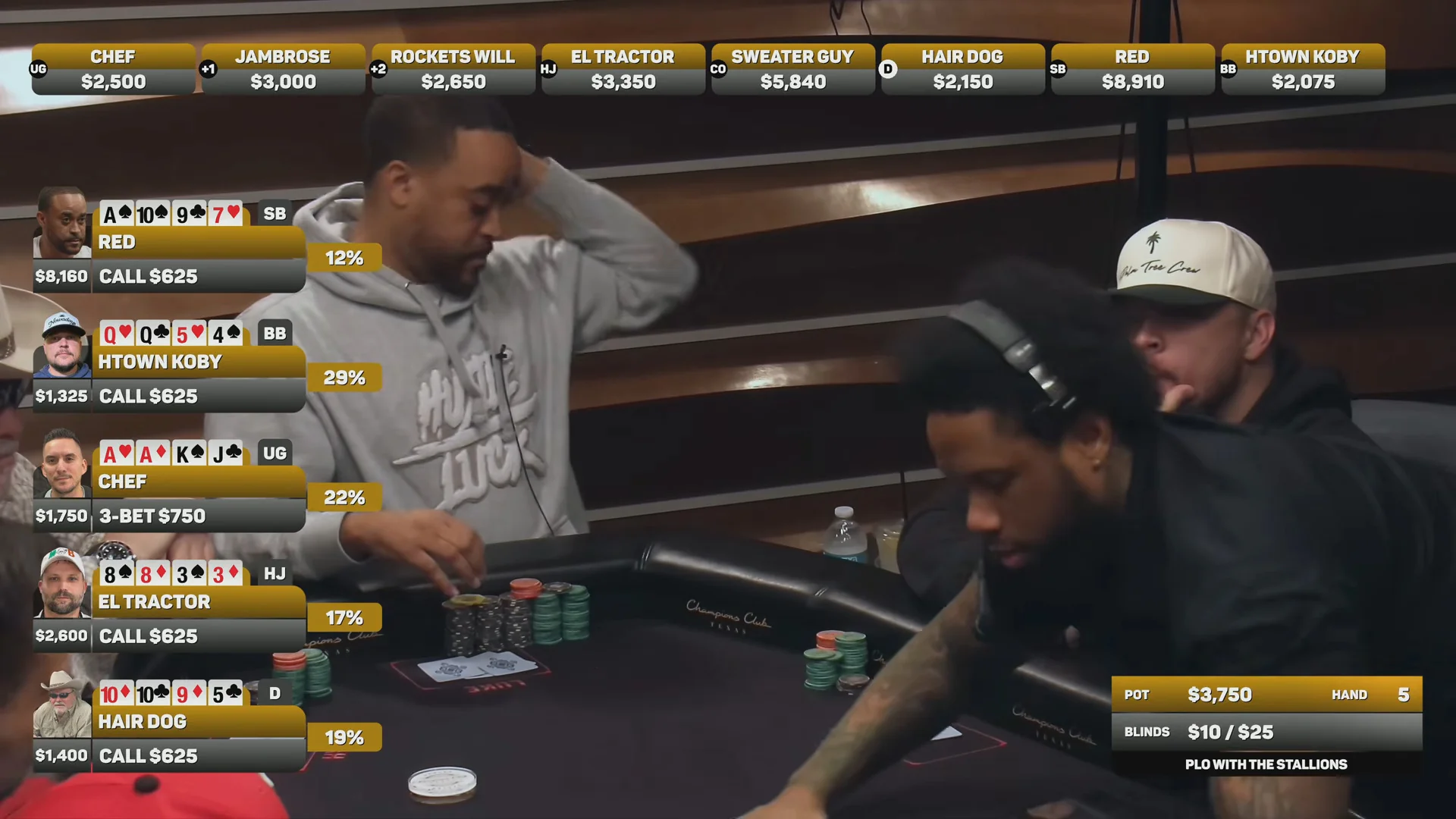
The best PLO starting hands have cards that work together, a quality often called coordination or connectedness. You want your four cards to support each other and give you the chance to flop strong made hands and big draws. The gold standard of starting hands is a holding like double-suited, connected high cards, for example an ace and king of one suit alongside a queen and jack of another. A hand like that can make the nut flush in two suits, plus straights and top pairs, giving you lots of ways to win.
A few simple guidelines for choosing hands as a beginner:
- Favor coordinated cards. Four cards that connect, like a run of high cards or double-suited holdings, are far better than four random ones.
- Value “double-suited” hands. Having two of your cards in one suit and the other two in a second suit gives you two shots at making a flush, ideally the nut flush.
- Be wary of danglers. A “dangler” is a card that does not connect with your other three, like the deuce in a hand of ace-king-queen-two. It effectively turns your four-card hand into a weaker three-card one.
- Do not overrate big pairs. Aces are still the nut starting hand in PLO, but they are nowhere near as strong as in NLH, especially if the other two cards do not support them. A hand like AcAs7h3d is not as strong as it might seem, and often won’t be re-raised when deep stacked.
The overall lesson is that PLO is about the potential of all four cards working as a unit, not just the strength of one or two of them.
Common PLO mistakes beginners make
Almost every player coming from Hold’em makes the same handful of mistakes when they first sit down at a PLO table. Knowing them in advance will save you a lot of money.
Forgetting the two-card rule. We have said it already, but it bears repeating because it is that common. Beginners constantly think they have a flush or a straight when they only have one card of the relevant suit or the wrong connecting cards. Always confirm you are using exactly two cards from your hand.
Overvaluing weak made hands. In NLH, top pair often wins the pot. In PLO that hand is frequently second-best by the river, because opponents have four cards and complete their draws, sets and two pairs far more often. Chasing pots with weak hands is a fast way to lose your stack.
Playing too many hands. Four cards can make hands look deceptively pretty. Beginners often play super-wide preflop in PLO, whereas the more refined PLO players play tighter. Hand selection is going to dictate your win-rate in PLO.
Chasing non-nut draws. Drawing to a flush or straight that is not the nuts is dangerous in PLO, because even if you hit, someone may well have a better version of the same hand. Learning to draw to the nuts, rather than any old draw, is a key adjustment.
Misjudging the math. Because pots are capped at pot-size and equities run close, the pot odds and implied odds in PLO work differently than in Hold’em. Understanding when to realize your draw and when to pass up a seemingly monster hand takes time and experience.
The reassuring news is that all of these can be fixed. They come from applying Hold’em instincts to a different game, and once you retrain those instincts, your PLO results improve quickly.
How to get good at Pot-Limit Omaha?
Studying PLO is great, but you will only get better through reps. Play hands, put in volume and learn where your weaknesses are. The only real negative about learning through live play is that you will have to lose a chunk before some lessons sink in.
That is where structured practice makes all the difference. Advanced Poker Training’s PLO trainer lets you play hundreds of hands per hour against realistic AI opponents, in a risk-free environment built specifically to sharpen your game. You get instant feedback on your decisions, so instead of wondering whether you played a hand well, you find out straight away and learn from it. It is the fastest way to build the instincts that PLO demands, from starting hand selection to reading draws and recognizing the nuts.
You can also work through the beginner video content to build a solid foundation before you sit down. Whether you are a Hold’em player looking to cross over or a complete beginner starting fresh, drilling the fundamentals in a practice setting will get you up to speed far quicker than trial and error at the tables.
Ready to play your first PLO hand?
PLO can be so exhilarating, you can win many times your original buy-in in cash games or have the run of a lifetime in an MTT. The action is non-stop and the strategy is unique. It plays a lot different to NLH, but any poker player worth their salt should be studying PLO in some capacity.
Remember that you need to use two cards, understand nut potential, play tight and aggressive and value position, and you are on your way to becoming a PLO crusher.
Ready to put it into practice? Try Advanced Poker Training free and start drilling PLO against realistic opponents today. Your first big Omaha win is closer than you think.
FAQ
PLO stands for Pot-Limit Omaha, a variant of Omaha poker where players receive four hole cards and betting is capped at the size of the pot.
PLO isn’t necessarily harder to learn, since the rules are similar to Hold’em, but it’s more complex to master. With four hole cards, equities run closer, draws are bigger, and the game rewards precise hand reading and nut awareness.
In PLO you must use exactly two of your four hole cards, combined with three community cards, to make your hand. You can never use one or three of your own cards.
The strongest PLO starting hands are double-suited, coordinated high cards that work together, such as an ace-king of one suit alongside a queen-jack of another, giving you multiple ways to make the nuts.
Yes. You can practice PLO risk-free against realistic AI opponents using Advanced Poker Training’s Omaha trainer, getting instant feedback on your decisions before playing for real money.
